
This Easy Massaged Kale Salad is my favorite way to turn hearty kale leaves into a delicious and satisfying healthy salad.
With simple ingredients and a quick massage that softens the kale, you get tender greens without all the toughness.
It’s fresh, flavorful, and easy enough to make for a weeknight dinner or meal prep.
Who knew kale could actually be this good?

Massaged Kale Salad
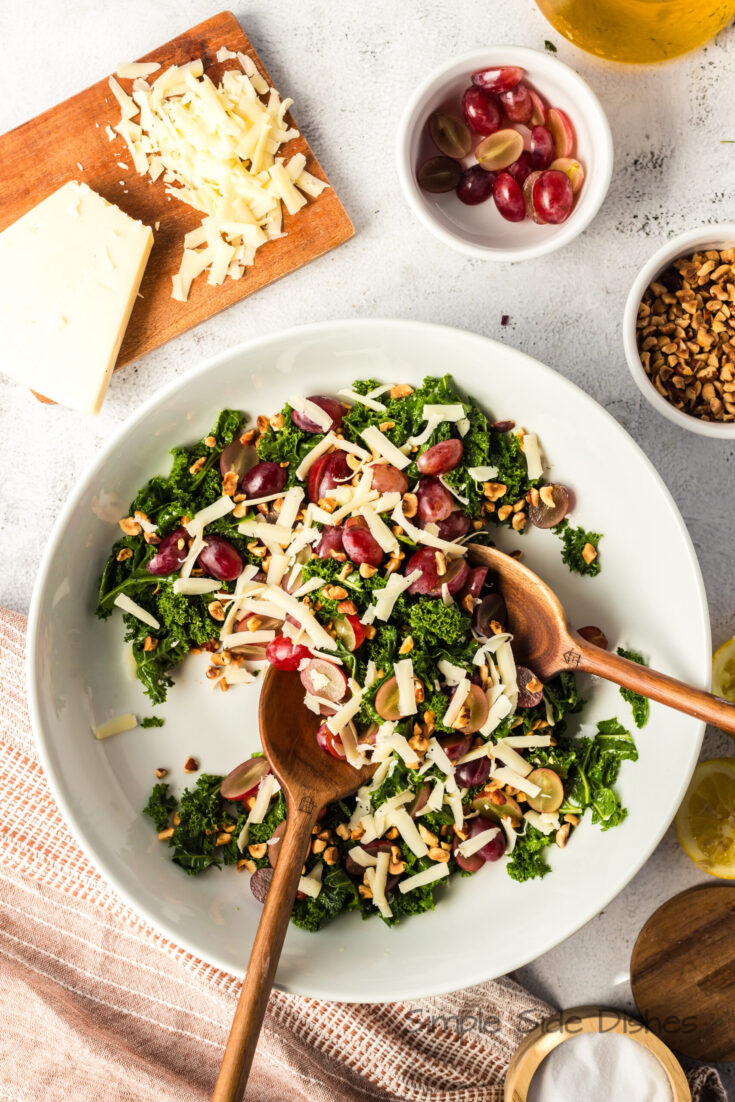
Once you try this Easy Massaged Kale Salad, it just might become your favorite way to enjoy those hearty kale leaves. The simple ingredients come together for a fresh, flavorful healthy salad.
Ingredients
Nutrition Information:
Yield:
4Serving Size:
1Amount Per Serving: Calories: 227Total Fat: 9gSaturated Fat: 1gUnsaturated Fat: 8gCholesterol: 1mgSodium: 219mgCarbohydrates: 34gFiber: 11gSugar: 10gProtein: 11g
The Strange Evolution of Massaged Kale
Massaged kale wasn’t always a thing. For most of culinary history, kale was cooked: braised with pork fat in the South, thrown into Portuguese caldo verde, simmered in Italian ribollita. Raw kale salads didn’t hit menus in any serious way until the early 2000s, when California chefs started treating sturdy greens like a canvas instead of a side note.
The massaging technique itself likely comes from Japanese preparations of cabbage and leafy greens, where salt and physical agitation are used to break down tough vegetables before pickling or serving. American chefs adapted it for kale, realizing that a few minutes of hands-on work could make Lacinato and curly varieties tender enough to eat raw without cooking.
Now it’s everywhere: meal prep staples, grain bowls, lunch counter standards. The reason it stuck is simple. It works. And once you understand why, you’ll never go back to sad, squeaky kale again.
Why This Recipe Actually Works
This isn’t just about rubbing leaves together and hoping for tenderness and an easy lunch.
Kale is structurally different from lettuce or spinach. Its cell walls are thicker and reinforced with cellulose and lignin, the same compounds that make plant stems rigid. When you massage kale with salt and fat, you’re doing two things at once: the salt draws out moisture and begins to break down cell structure through osmosis, while the fat coats each leaf and lubricates the fibers so they soften instead of snap.
The result is a complete texture transformation. Massaged kale goes from stiff and papery to silky and pliable in about three to five minutes. It also becomes more receptive to dressing, because those broken-down cells create more surface area for flavors to cling to. You end up with a salad that tastes seasoned all the way through, not just on the surface.
Timing matters here. If you under-massage, the kale stays tough and the dressing slides off. If you over-massage or let it sit too long in salt, it gets limp and soggy. The sweet spot is when the leaves feel supple but still have some structure. You’ll know it when you feel it: the greens will darken slightly, shrink in volume, and lose that waxy stiffness.
This technique also makes kale shelf-stable in a way most salads aren’t. Because the cell walls are already broken down, the greens don’t wilt further when dressed. You can make this salad in the morning, pack it for lunch, and it’ll still have integrity hours later. That’s why it became a meal-prep darling. It’s one of the few salads that gets better as it sits.
The Ingredients and What They’re Really Doing
Every ingredient here has a job. Swap thoughtlessly and the whole thing falls apart. Don’t worry, this easy kale salad is one you can master!
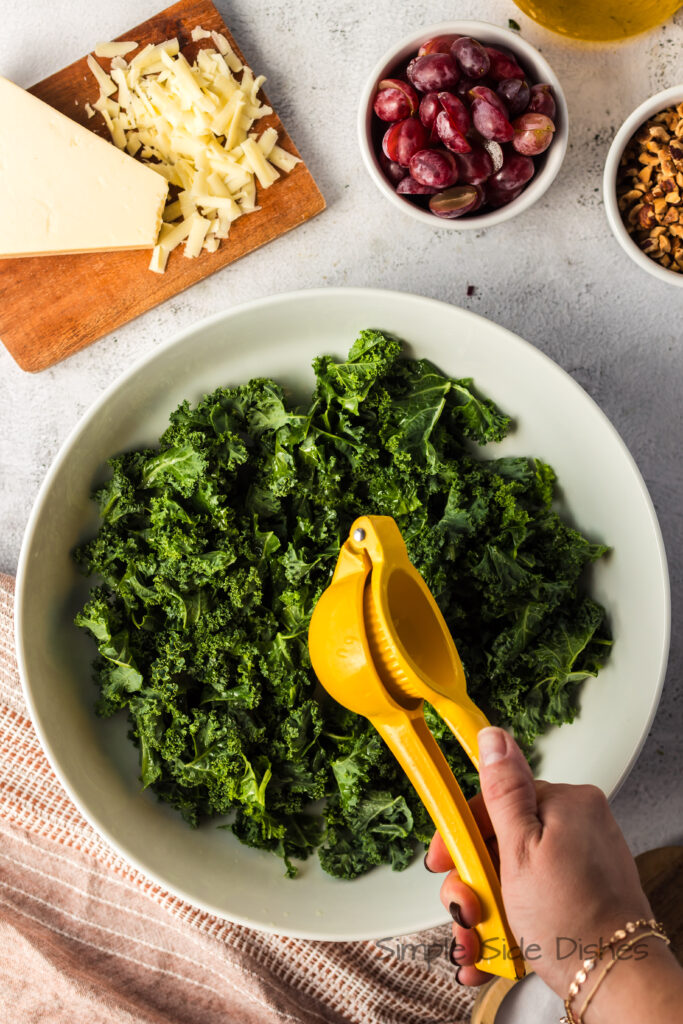
- Lacinato kale (also called Tuscan kale or dinosaur kale), 1 large bunch (about 16 ounces): This is the best variety for massaging. The leaves are flatter, more tender, and have a less aggressively bitter flavor than curly kale. Curly kale works too, but it takes longer to break down and the texture stays chewier. If you’re using curly, add an extra minute of massage time and consider chopping it finer into bite-sized pieces.
- Kosher salt, 1/2 teaspoon: This is what does the actual tenderizing. The coarse grains provide abrasion as you rub the leaves, and the salt itself pulls moisture out of the cells. Don’t skip it or use too little. If you only have fine sea salt, use a scant 1/4 teaspoon; it’s more concentrated and can oversalt quickly.
- Extra-virgin olive oil, 1 tablespoon: Fat is the other half of the equation. It coats the leaves, softens the fibers, and adds richness. Use a fruity, high-quality oil here since it’s not being cooked. If you don’t have good olive oil, this is not the place to use the cheap stuff. The flavor will be flat and the texture won’t develop the same silkiness.
- Fresh lemon juice, 2 tablespoons: Acid brightens everything and cuts through the earthy, mineral flavor of kale. Lemon is classic, but lime, white wine vinegar, or even a splash of apple cider vinegar works. Bottled lemon juice is a last resort; the flavor is tinny and one-dimensional.
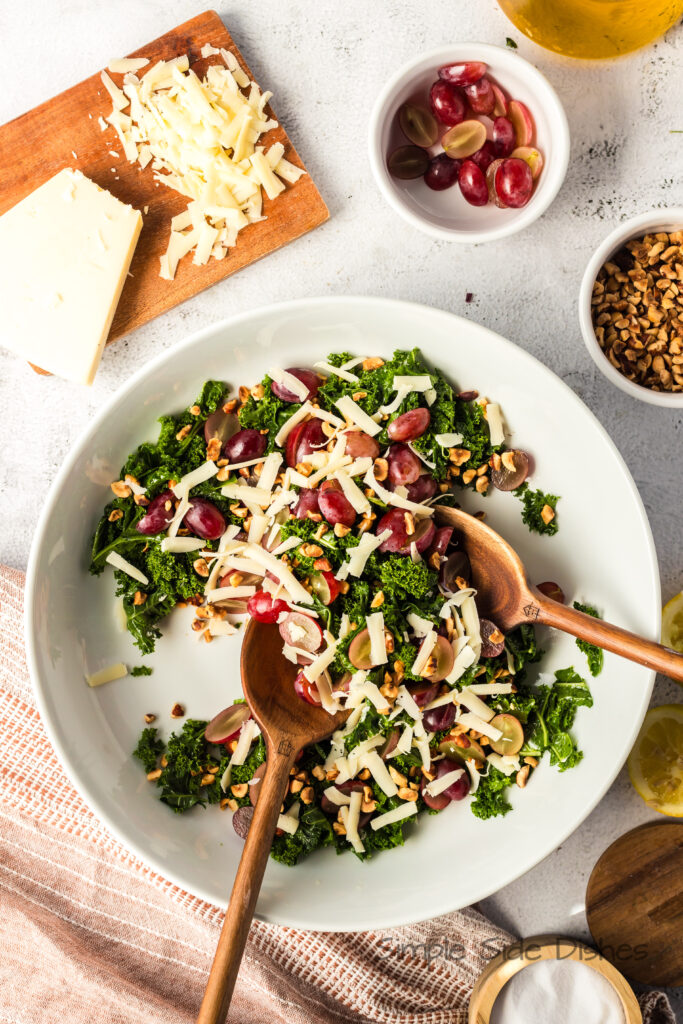
- 1 1/2 cups red seedless grapes: Kale can be quite bitter so adding something sweet like grapes helps balance out the salad into something lovely your tastebuds will enjoy!
- 3/4 cups hazelnuts, chopped: This adds a nutty fully body flavor to your salad that really makes the salad pop.
- Asiago Cheese, 1/4 cup finely grated: This adds umami and a salty, nutty backbone. Pecorino Romano is a great swap if you want something sharper. Nutritional yeast works for a dairy-free option, though the flavor skews more toasty than funky. Pre-grated bagged Parmesan is a texture disaster; it’s coated in cellulose and won’t melt into the salad the way fresh-grated does.
Pro Tip: Where to Find Lacinato Kale – Most grocery stores stock it year-round in the produce section, usually near the chard and collard greens. Farmer’s markets are your best bet for ultra-fresh bunches with smaller, more tender leaves. Look for deep green color with no yellowing or brown spots. The leaves should feel firm and slightly waxy, not limp or dry at the edges.
How to Actually Make It
The process is simple, but each step matters.
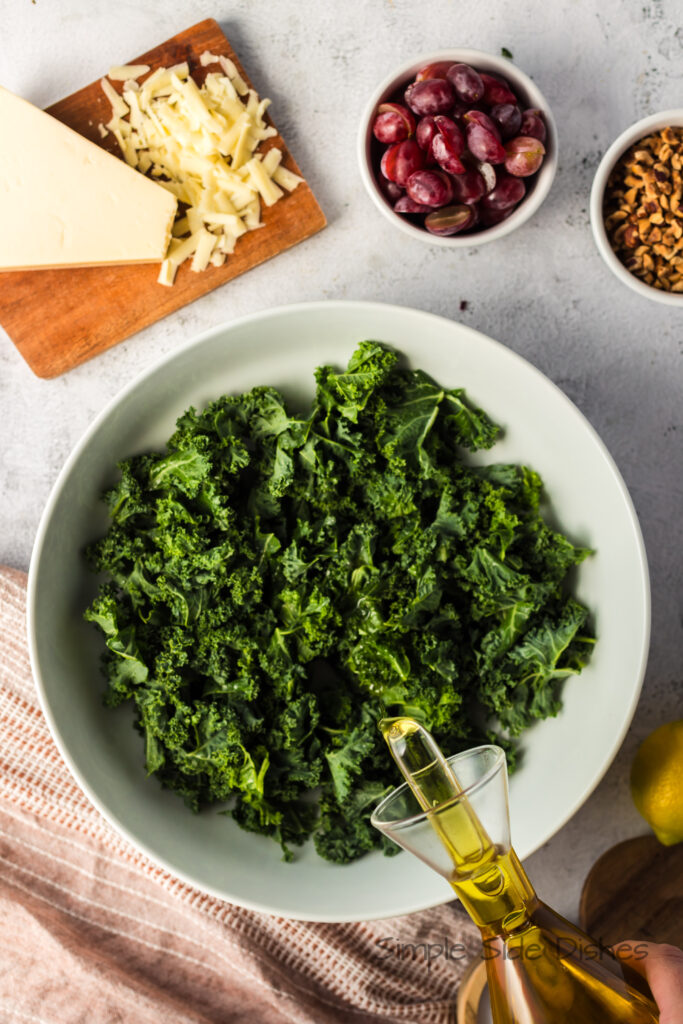
- Prep the kale: Rinse the bunch under cold water and dry it completely using a salad spinner, kitchen towel. or paper towel. Lay each leaf flat on your cutting board, fold it in half lengthwise along the center stem, and slice or tear the stem away. The stems are too fibrous to eat raw. Discard them or save for stock. Stack the de-stemmed leaves and cut them crosswise into small pieces, about 1 to 2 inches wide. Don’t chop them too fine or they’ll turn into mush when massaged.
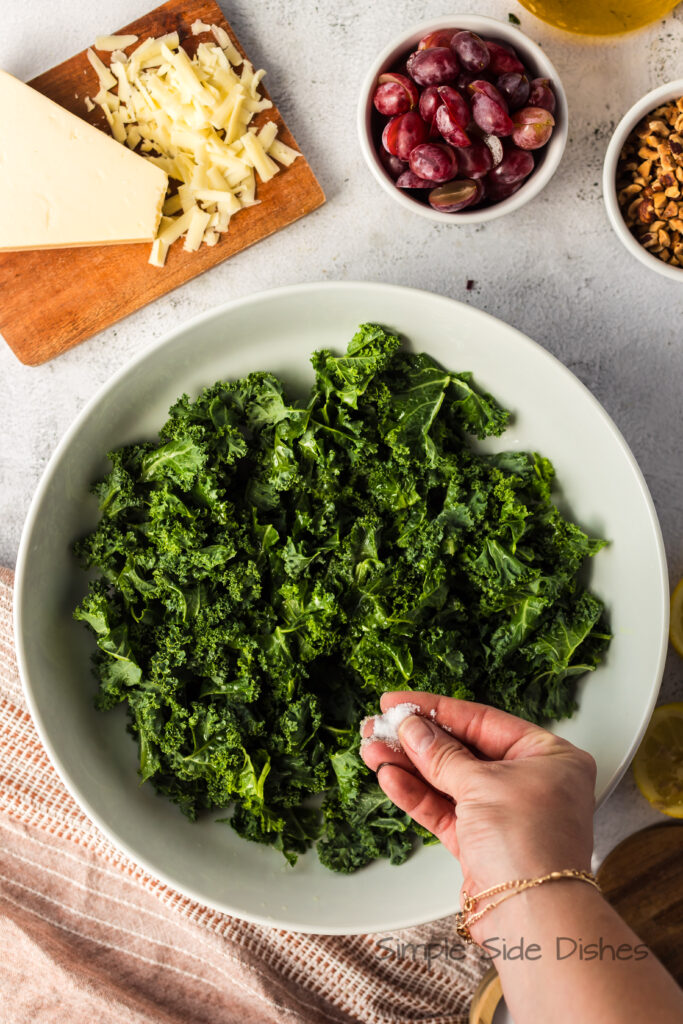
- Massage the greens: Pile the kale into a large mixing bowl. Sprinkle the kosher salt evenly over the top. Drizzle in the olive oil and lemon juice. Now the best way to get a good massage is to get your clean hands in there. Use both hands to scrunch, squeeze, and rub the leaves together, like you’re kneading dough but less aggressively. You’ll feel the leaves start to soften and release moisture after about a minute. Keep going for another 2 to 3 minutes until the kale has darkened in color, reduced in volume by about half, and feels silky instead of stiff. Your hands will get oily and slightly green during the massaging process. That’s the goal.
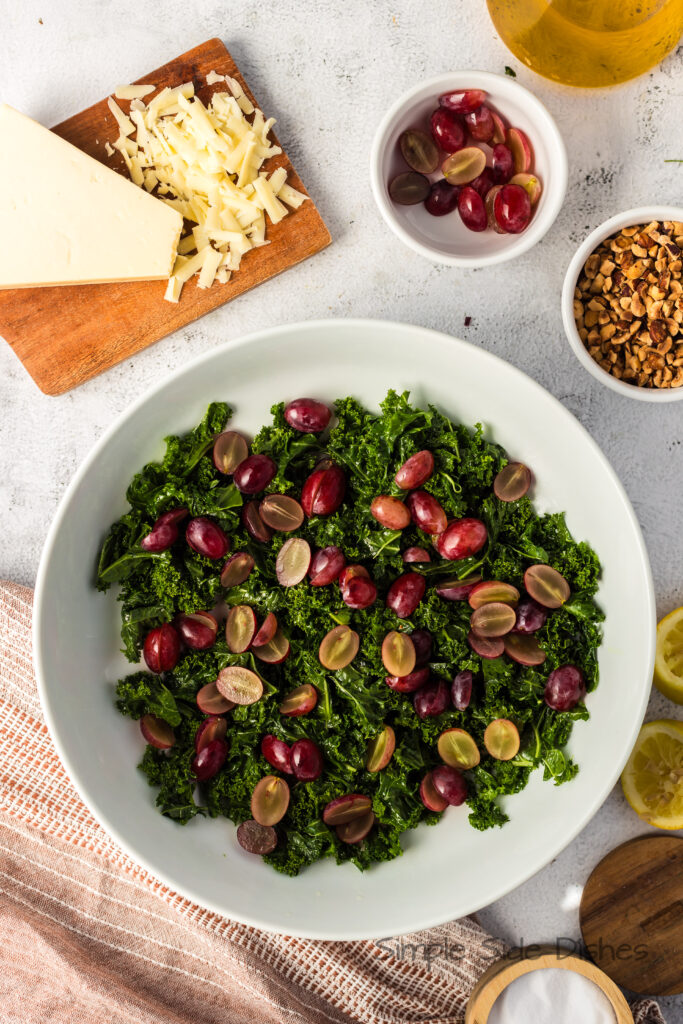
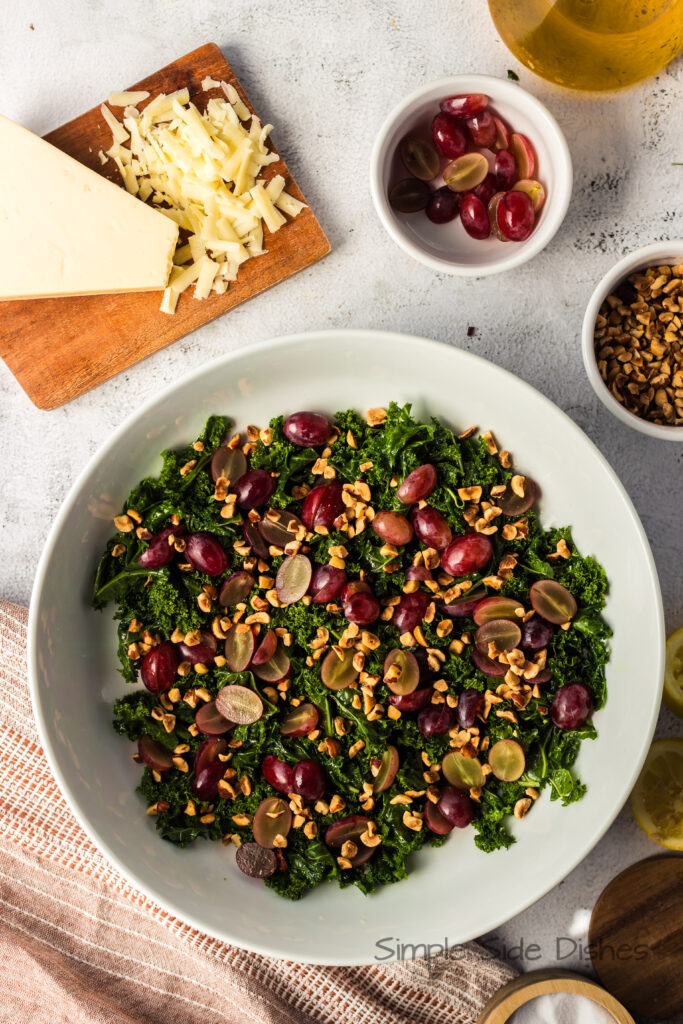
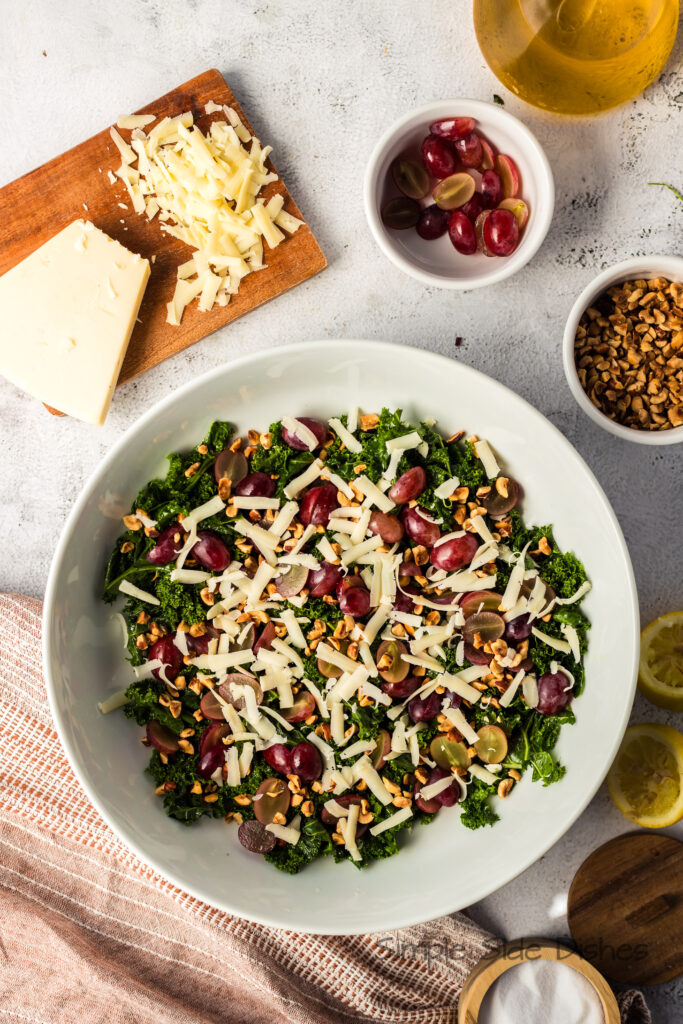
- Create your salad: Toss the prepared kale leaves into a serving bowl. Top with grapes, hazelnuts and cheese.
- Let it rest (optional but recommended): If you have 10 to 15 minutes, let the dressed salad sit at room temperature. The flavors will meld and the kale will continue to tenderize slightly. This step isn’t mandatory, but it takes the salad from good to great.
At this point, the salad is ready to eat as is, or you can fold in any of your optional add-ins. If you’re adding crunchy elements like nuts or seeds, do it right before serving so they don’t get soggy.
Pro Tip: This salad doesn’t have a salad dressing. The lemon juice, salt and olive oil will not only help break down your tough kale, it will act as your salad dressing in this delicious kale salad too!
How to Know It’s Ready
Your senses will tell you everything.
- Touch: The leaves should feel soft and pliable when you pinch them between your fingers, not brittle or waxy. If they still snap when you bend them, keep massaging.
- Color: Massaged kale turns a deeper, richer green, almost forest-like. If it’s still bright, almost neon green, it hasn’t broken down enough yet.
- Volume: A full, fluffy pile of raw kale should reduce by about half once properly massaged. If it still looks like a giant mound of leaves, you’re not done.
- Taste: The bitterness should be subtle, not aggressive. The texture should be tender but still have a little chew. If it tastes harsh or feels like you’re eating paper, it needs more time or more salt and oil.
- Moisture: You should see a small pool of liquid at the bottom of the bowl, a mix of water released from the kale and the oil you added. That’s a good sign. It means the cell walls broke down and the salt did its job.
Ways to Change It Without Ruining It
The base recipe is solid, but there’s room to play.
- Swap the cheese: Try feta for a tangy, creamy contrast, or aged Manchego for something nutty and sharp. Vegan? Nutritional yeast or a cashew-based Parmesan works surprisingly well.
- Go Asian: Replace the lemon juice with rice vinegar and lime juice, swap the chese for toasted sesame seeds, and add a drizzle of toasted sesame oil. Top with sliced scallions and crushed peanuts. The technique stays the same; the flavor profile shifts completely.
- Make it fruity: Toss in dried cherries, pomegranate seeds, or thinly sliced apple for a sweet-tart contrast. Add toasted pecans and a drizzle of maple syrup in the dressing for a fall-inspired version.
- Go Mediterranean: Add Kalamata olives, sun-dried tomatoes, and cucumber. Swap the Parmesan for crumbled feta and use red wine vinegar instead of lemon juice. Finish with a sprinkle of oregano.
- Bulk it up with grains: Fold in cooked farro, quinoa, or freekeh. The grains soak up the dressing and turn the salad into something more substantial. This is especially good for meal prep.
The massage technique is the constant. Once you understand that, you can riff on flavors endlessly and still end up with something delicious.
Storing It and Making It Last
This is one of the few salads that improves with time, up to a point.
- In the fridge: Store the dressed salad in an airtight container for up to three days. The kale will continue to soften slightly, which is actually a good thing. Just give it a quick toss before serving to redistribute the dressing.
- Undressed kale: If you want to prep ahead but keep maximum freshness, massage the kale with salt and oil, then store it separately from the dressing and cheese. Add the lemon juice, garlic, and Parmesan right before serving. This method keeps the kale tender but prevents it from getting too soft or the cheese from clumping.
- Freezing: Don’t. Massaged kale doesn’t freeze well. The cell structure breaks down too much and you’ll end up with a mushy, watery mess when it thaws.
- Reheating: You don’t reheat this salad. It’s meant to be eaten cold or at room temperature. If you want to warm it slightly, toss it in a hot skillet for 30 seconds just to take the chill off, but don’t cook it or it’ll wilt into oblivion.
Additional delicoius Salad Recipes You’ll Love
Kale Salads:
Green Salads:
- Roast Beets Salad
- Daikon Salad
- Rhubarb Salad
- Raspberry Kiwi
- Asian Chopped Salad
- Fumi Salad Recipe
- Chef Salad
- Avocado and Melon Salad
- Farro Arugula Salad
- Fiesta Salad
This isn’t a salad you make once and forget. It’s the kind of recipe that becomes a staple, the thing you turn to when you want something green that doesn’t feel like a chore. The technique is simple, the results are reliable, and the flavor is so much better than you’d expect from a pile of raw kale.
Once you try this Massaged Kale Salad, it may quickly become your favorite way to enjoy fresh kale. It’s a great recipe for busy weeknights, meal prep, or whenever you need a fresh and flavorful perfect side dish. Simple, satisfying, and full of fresh flavor, this salad is one you’ll want to make again and again.