
Earthy, sweet, and full of fresh flavor, this Roasted Beet Salad is a simple yet elegant dish perfect for any occasion. Tender roasted beets paired with crisp greens and a tangy dressing make it a beautiful, wholesome side or light meal.
Having said that, we all know roasted beets are criminally underrated.
When you roast them properly, they turn into these sweet, earthy gems with caramelized edges that taste nothing like the sad, canned versions you probably grew up avoiding.
The natural sugars concentrate, the texture goes from weird and squeaky to melt-in-your-mouth tender, and suddenly you’ve got something you actually want to eat.
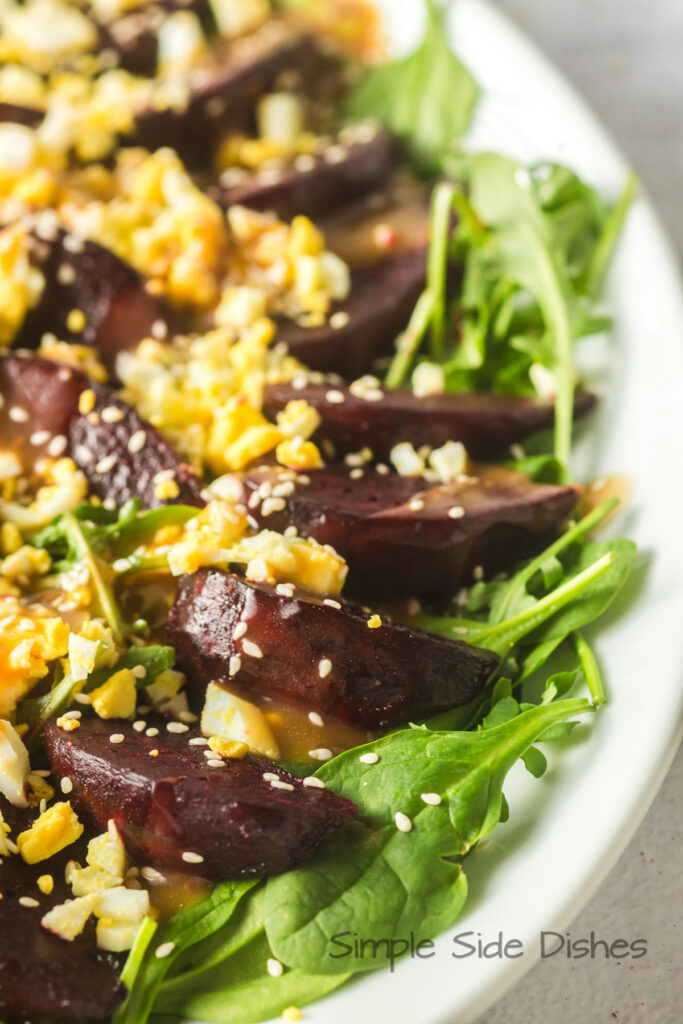
This salad balances that intense earthiness with creamy eggs, tangy watercress and flavorful sesame seeds. It’s the kind of dish that looks impressive enough for dinner guests but comes together easily enough for a Tuesday night.
And once you know how to roast beets the right way, you’ll never go back. This is the ultimate beet lover salad and a perfect side dish to a healthy dinner.
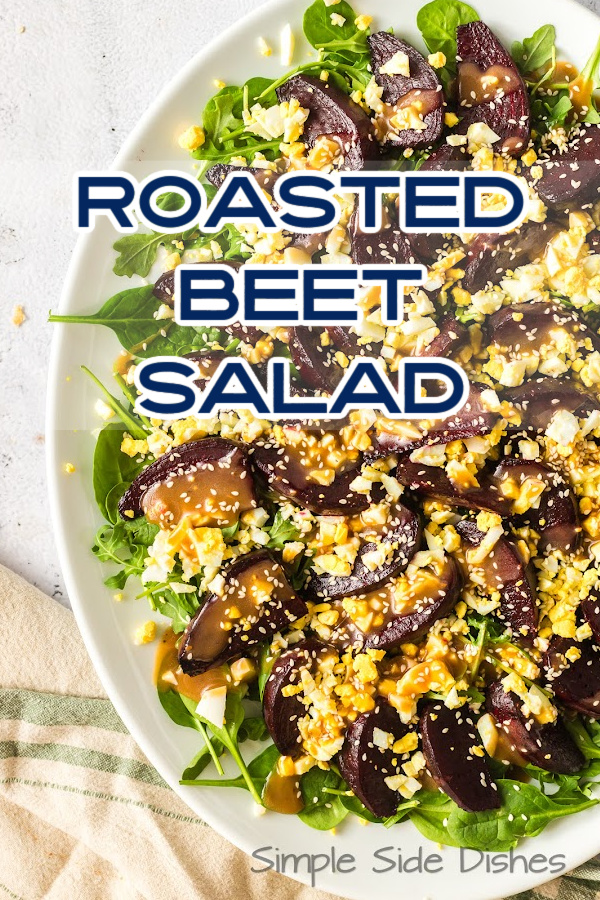
Roasted Beet Salad
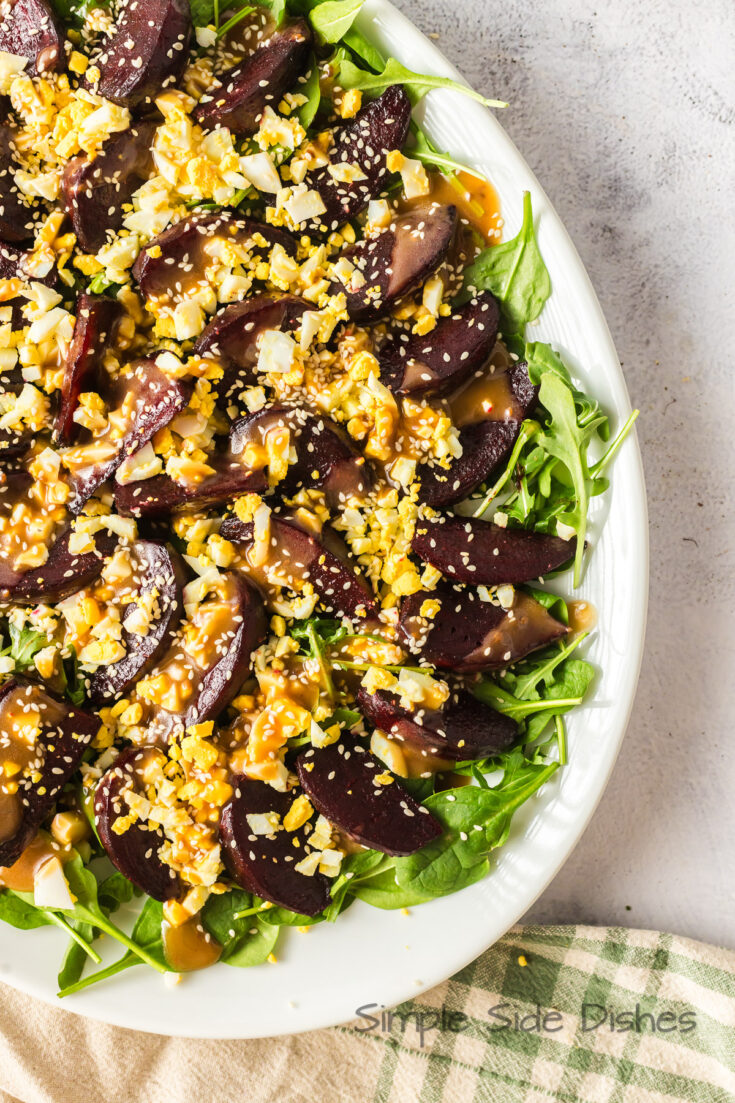
Earthy, sweet, and beautifully vibrant, this Roasted Beet Salad is a simple yet elegant dish that’s perfect for any occasion.
Ingredients
Salad
Instructions
- Preheat oven to 400*F
- Trim the beet greens, leaving about an inch of stem attached.
- Scrub beets under cold water to remove any dirt. DO NOT PEEL.
- Place each beet individually on a sheet of tin foil.
- Drizzle with a teaspoon of olive oil and a pinch of salt.
- Wrap tin foil tightly around beet and place on a rimmed baking sheet.
- Cook for 50-70 minutes, depending on the size.
- While beets are cooking, cook eggs to hard boil stage. Peel and set aside.
- When beets are tender, carefully open packets and let beets cool to warm and able to handle them.
- Lower temperature on oven to 350*F
- When cool enough to touch, rub beet skins off with a paper towel and discard.
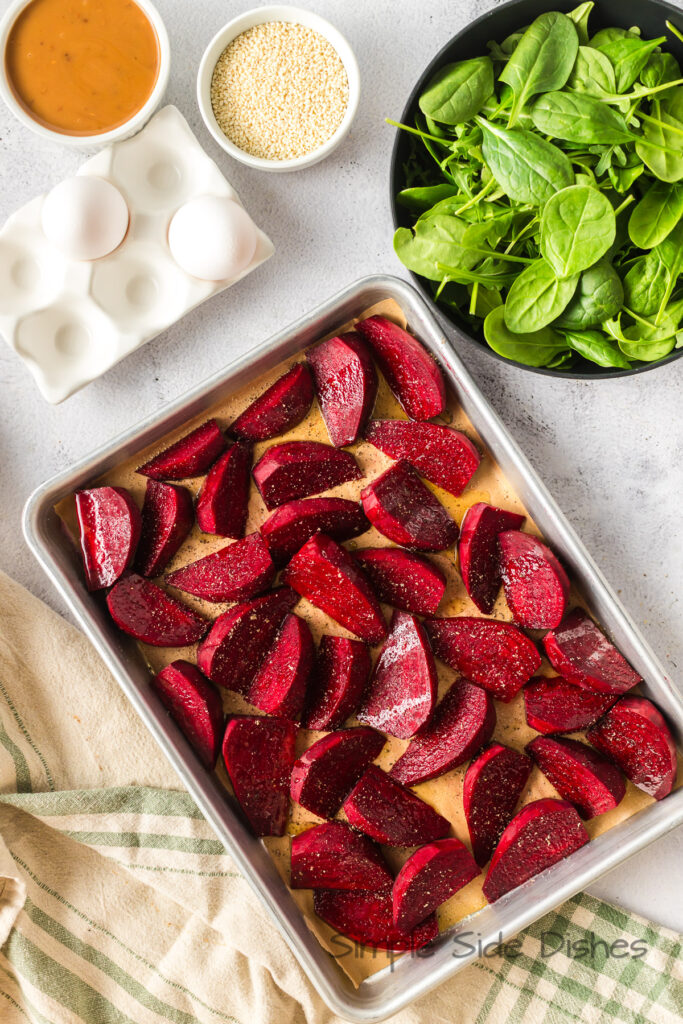
- Cut the stem and tip off and slice them in wedges.
- Place wedges back on the lined cooking tray and bake for 5 minutes.
- Set aside and make the dressing.
- In a small bowl whisk the miso, water, sugar, rice wine vinegar, soy sauce and salt.
- Whisk in the peanut oil and sesame oil.
- Arrange watercress on a platter and top with beets, chopped hard boiled eggs and a sprinkle of toasted sesame seeds.
- When ready to serve either lightly dress the salad or allow individuals to dress their own salad.
Nutrition Information:
Yield:
6Serving Size:
1Amount Per Serving: Calories: 359Total Fat: 24gSaturated Fat: 4gUnsaturated Fat: 20gCholesterol: 62mgSodium: 451mgCarbohydrates: 9gFiber: 2gSugar: 2gProtein: 5g
The Ancient Root That Conquered Tables Worldwide
Beets have been cultivated since ancient Greek and Roman times, but they weren’t always the sweet root vegetables we know today.
Early beets were grown primarily for their greens, with the roots being bitter and fibrous. It wasn’t until selective breeding in the 16th century that beets developed their signature sweetness.
Roasting beets became popular in European kitchens as a way to concentrate their natural sugars and create a deeper, more complex flavor.
In Eastern European and Russian cuisine, roasted beets became a cornerstone ingredient in dishes like borscht and various salads.
The French took it further, pairing roasted beets with sharp cheeses and bitter greens in composed salads that became bistro staples.
The modern roasted beet salad we know today emerged from California cuisine in the 1980s and 90s, when chefs started combining Mediterranean techniques with local produce.
What started as peasant food has evolved into a dish that showcases how simple roasting can transform an ingredient completely.
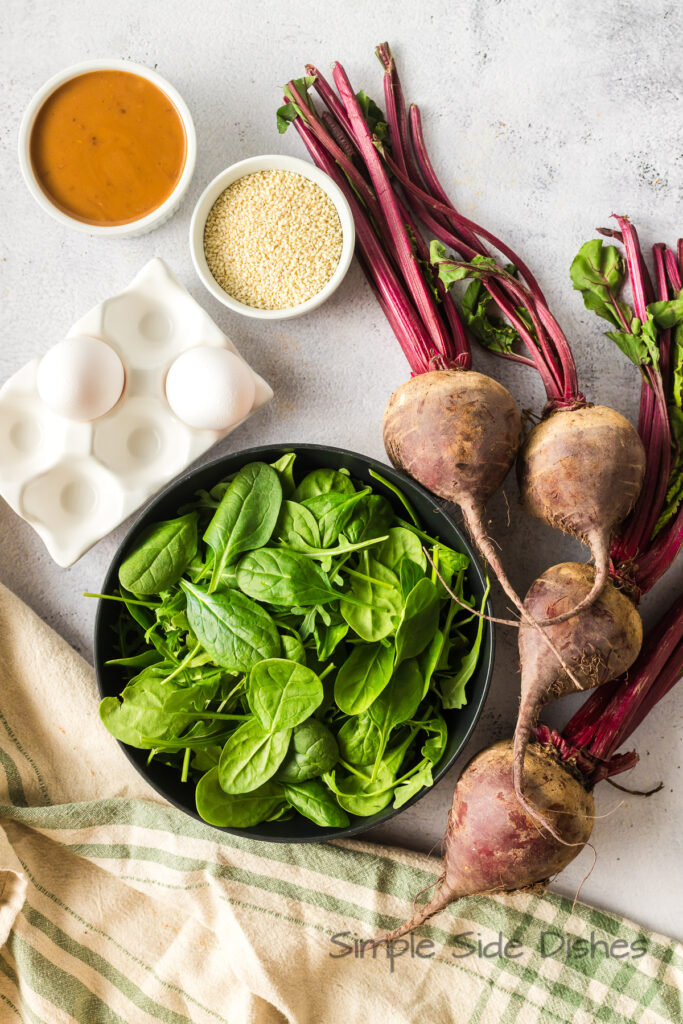
Why This Recipe Works
This beets recipe goes the extra mile to create a perfect balance of sweet and savory flavors in this side salad recipe. Whether your hosting a dinner party or a late summer summer picnic, this beet salad is a great way to show off your culinary skills!
The magic happens when you roast beets whole and unpeeled in a tightly sealed packet.
This technique steams the beets in their own moisture while simultaneously concentrating their sugars through dry heat.
The skin acts as a protective barrier, keeping the flesh tender and preventing it from drying out. When you peel them after roasting, the skins slip right off and you’re left with intensely flavored, perfectly textured beets.
The temperature matters more than you think. Roasting at 400°F creates the ideal environment for caramelization without burning.
Any hotter and the exterior chars before the inside cooks through. Any cooler and you’re basically steaming them without getting those crucial browned edges and concentrated sweetness.
Equipment You’ll Need
A rimmed baking sheet is essential because beets release moisture as they roast. You need that lip to contain any liquid and prevent it from dripping onto your oven floor and creating a smoky mess.
Heavy-duty aluminum foil makes the roasting packets that trap steam and heat around the beets. Don’t cheap out with thin foil that tears easily. You want a tight seal that holds up for the full roasting time. Parchment paper works too, but foil conducts heat better and creates a more efficient cooking environment.
A sharp paring knife or vegetable peeler removes the skins after roasting. The skins should slide off with minimal effort, but you’ll need something to help coax them along. Gloves are optional but recommended unless you want magenta-stained hands for the next day or two.
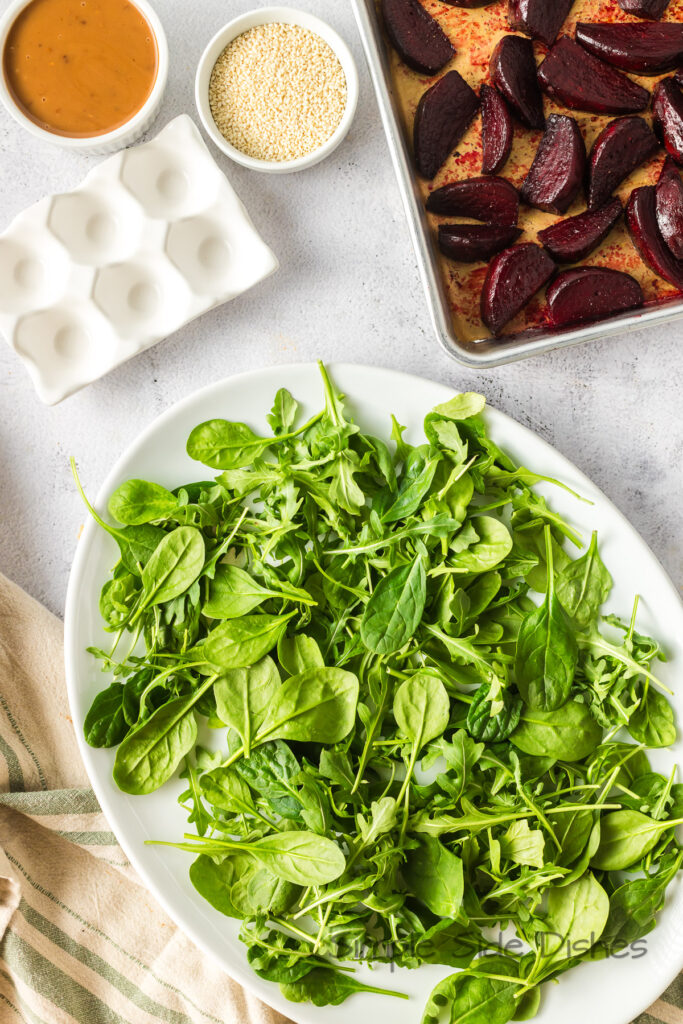
Ingredients & What They Do
Salad:
- Beets – Beets (2 pounds, about 4-5 medium): Look for beets that are firm, smooth, and about the same size so they cook evenly. Avoid any with soft spots or shriveled skin. The greens should look fresh if they’re still attached, but you can definitely buy beets with the greens already removed. Gold beets work beautifully if you want a milder, slightly sweeter flavor, or use a mix of red and gold for visual contrast.
- Olive oil (5 tablespoons, divided):You need fat to help the beets caramelize and to carry the flavors in the dressing. Cheap olive oil can taste bitter so use something you’d actually want to taste.
- Kosher salt (to taste): Season aggressively because beets are dense and need salt to bring out their sweetness.
- Watercress(1 bunch): Adds a fresh, peppery bite that balances the sweetness of the beets.
- Hard boiled eggs (2 large): Creamy richness that makes the salad more satisfying.
- Toasted sesame seeds (2 Tablespoons): A nutty crunch that ties everything together.
Dressing ingredients:
- White miso paste (1/2 cup):Brings savory, umami depth to the dressing.
- Water (1/4 cup + 1 Tablespoon): Thins the dressing to the perfect pourable consistency.
- Sugar (1/4 cup): Balances the saltiness and enhances the beets’ natural sweetness.
- Rice wine vinegar (3 Tablespoons): Adds a light, tangy brightness.
- Soy sauce (2 teaspoons): Deepens flavor with a salty, umami kick.
- Salt (1/4 teaspoon): Sharpens and enhances all the flavors.
- Peanut oil (2 Tablespoons): Smooth, mild richness that rounds out the dressing.
- Sesame oil (1/2 teaspoon): A little goes a long way for warm, nutty aroma.
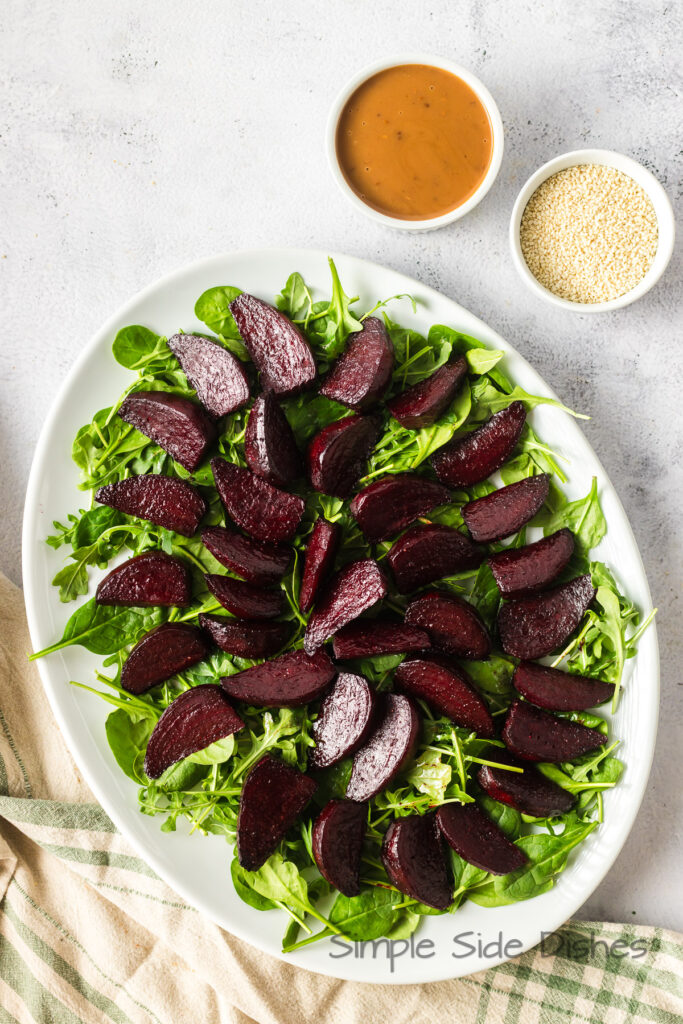
Step-by-Step Instructions
Getting perfectly roasted beets is all about the setup.
- Prep the beets: Preheat your oven to 400°F. Trim the beet greens, leaving about an inch of stem attached. Don’t cut into the actual beet or it’ll bleed out during roasting and you’ll lose flavor and color. Scrub the beets under cold water to remove any dirt, but don’t peel them yet.
- Wrap and roast: Place whole beets individually on a large piece of foil. Drizzle with about a teaspoon of olive oil and sprinkle with salt. Wrap tightly, crimping the edges to create a sealed packet. Place the packets on a rimmed baking sheet and roast for 50-70 minutes, depending on size. Small beets might be done in 45 minutes, while larger ones can take up to 90 minutes.
- Test for doneness: Carefully open one packet and pierce the beet with a paring knife. It should slide in with zero resistance, like you’re stabbing warm butter. If there’s any firmness, rewrap and keep roasting in 10-minute increments.
- Cool and peel: Let the beets cool in their packets until you can handle them comfortably, about 15 minutes. The skins should slip off easily when you rub them with a paper towel or your fingers. If they’re sticking, the beets needed more time in the oven. Cut off the stem and root ends using a sharp knife and a cutting board, then slice the warm beets and return them to prepared cookie sheet. Return beets to oven at 350*F for 5 minutes.
- Make the vinaigrette: In a small bowl, whisk the miso, water, sugar, vinegar, soy sauce, and salt. Add Peanut oil and sesame oil and whisk until combined.
- Toast the sesame seeds: toast the sesame seeds in a dry skillet over medium heat for about 1 minute shaking the pan frequently. You’ll smell them before you see them change color. As soon as they’re fragrant, get them off the heat and onto a plate so they don’t burn.
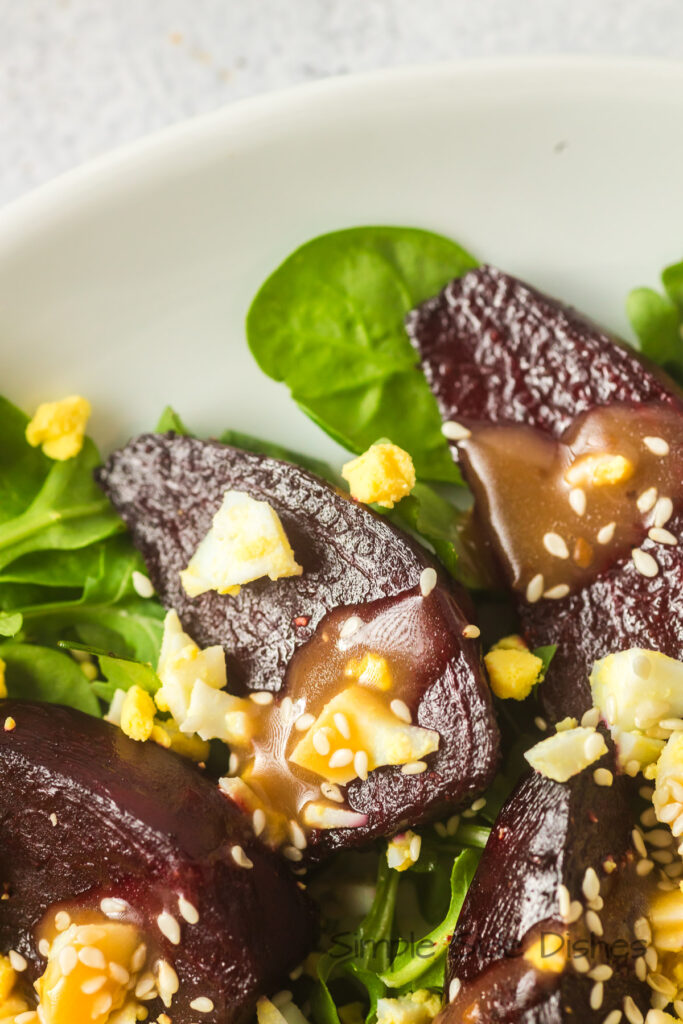
- Assemble the salad: Arrange the greens on a large serving platter or individual plates. Place beets, crumbled egg, and toasted sesame seeds on top of green in a single layer. Drizzle with the dressing and serve. Add salt and even black pepper if desired.
The salad is best served within 30 minutes of assembly, while the beets are still slightly warm and the greens are crisp.
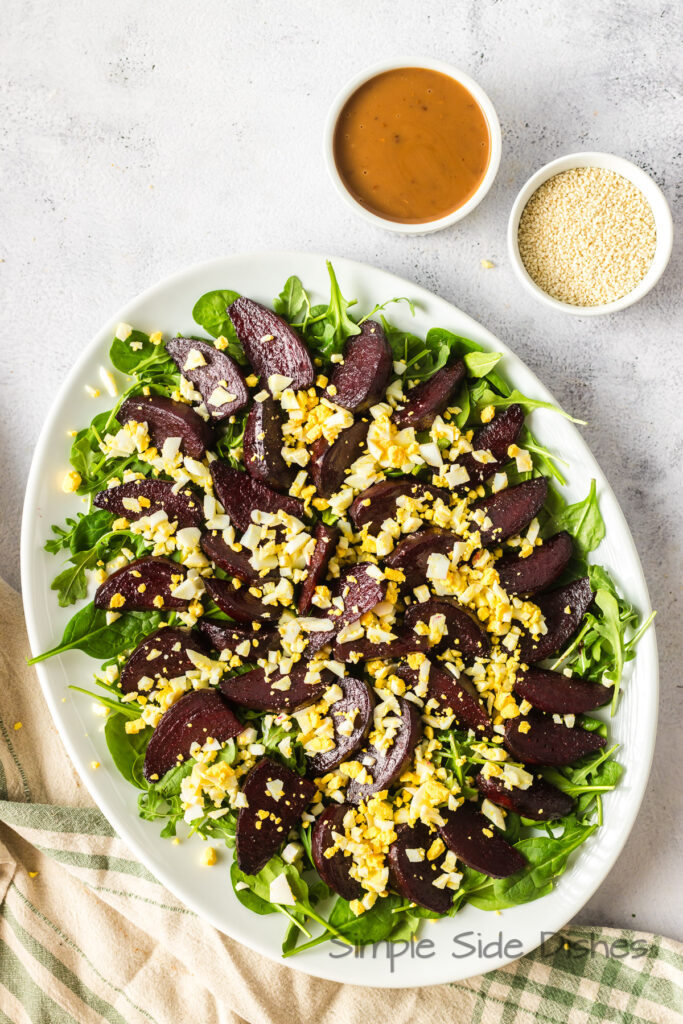
Tips from the Pros
- Medium beets are the sweet spot for even roasting. Smaller beets cook quicker and large beets take longer so make sure all beets are roughly the same size.
- You can find fresh beets year-round in most grocery stores, but they’re at their peak from June through October.
- Don’t toss the beet greens. If your beets came with fresh, vibrant greens attached, sauté them like you would chard or kale. They’re slightly sweeter than other cooking greens and pair incredibly well with garlic and olive oil.
- Roast beets in batches by color. Red beets will stain everything they touch, including gold or Chioggia beets if you roast them together. Keep colors separate if you want to preserve the visual contrast
- Beets don’t just taste great, they are a great addition to a healthy lifestyle. Beets are known to lower blood pressure, improved heart health, enhance athletic stamina and reduced inflammation.
These small details separate a good roasted beet salad from one that people actually remember and ask for the recipe.
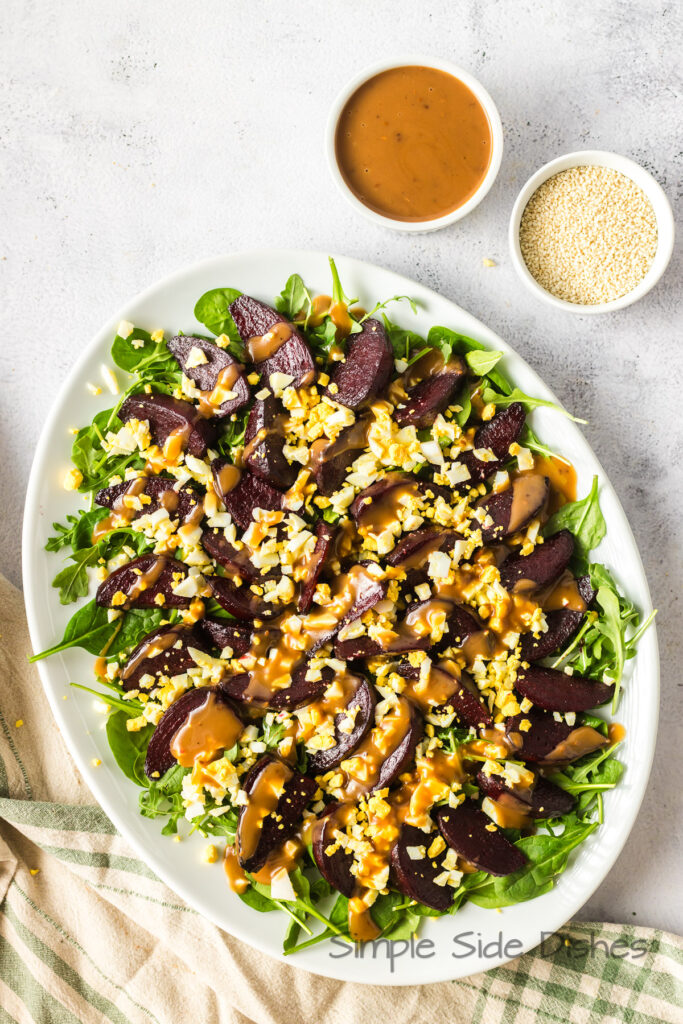
Pairing Suggestions
Side dish pairings should be simple and neutral. Roasted chicken, grilled fish, or a perfectly cooked steak all benefit from having this salad on the table. It also works alongside grain-based dishes like farro or quinoa bowls, adding color and brightness to earthy whole grains.
Skip pairing this with anything else that’s heavily dressed or citrus-forward because you’ll end up with competing acidity that overwhelms the palate.
Some main dish pairings are:
- Mushroom Frittata
- Beefy Noodle Casserole Recipe
- Fancy Nancy Chicken Salad Chick
- Pistachio Chicken Salad
Variations & Swaps
- Add grains to make this more substantial. Farro, quinoa, or wild rice turn the salad into a complete meal while soaking up the extra vinaigrette.
- Try adding sliced avocado for creaminess without dairy. It’s a completely different vibe but works surprisingly well with the earthy sweetness.
- Throw in some thinly sliced red onion or shallots for sharp contrast. Quick-pickle them in the vinaigrette for 10 minutes before adding to mellow the bite.
- Finish with a drizzle of aged balsamic vinegar reduction for a sweet, syrupy note that ties everything together. Don’t overdo it or the salad becomes cloying.
- Add a creamy goat cheese to balance the flavors of sweet and tangy.
- Feta cheese is a great option to add creaminess.
These variations keep the core concept intact while letting you adjust based on what you have or what sounds good.
Additional Salad Recipes You’ll Love…
- Beet Salad with Goat Cheese
- Grapefruit Beet Salad
- 4 Bean Salad
- Daikon Salad
- Chipotle Shrimp Salad Bowl
- Potato and Asparagus Salad
- Apple Fluff
- Kale Peach Salad
- Rhubarb Salad
- Kiwi Salad
- Cherry Tomato Salad
Storage Tips
- Store components separately for maximum freshness. Roasted beets keep in an airtight container in the fridge for up to a week. The dressing lasts just as long in a sealed jar.
- Don’t dress the greens until you’re ready to serve because they’ll wilt and turn slimy within hours. Keep them in a separate container with a damp paper towel to maintain crispness.
- Roasted beets freeze beautifully for up to three months. Let them cool completely, then pack in freezer bags with as much air pressed out as possible. Thaw in the fridge overnight before using.
Leftover Transformations
- Blend leftover roasted beets into hummus for a stunning pink dip that tastes earthy and slightly sweet. Add them to the food processor along with chickpeas, tahini, lemon juice, and garlic. It’s visually striking and tastes way more interesting than regular hummus.
- Chop beets into a hash with potatoes, onions, and a fried egg on top. The beets add sweetness and color to what’s normally a pretty beige breakfast.
- Toss beets into grain bowls or buddha bowls as a pre-cooked vegetable component. They add instant visual appeal and a flavor boost without any extra cooking.
- Puree beets into soup with vegetable stock, a splash of cream, and fresh dill. Serve hot or chilled depending on the season.
- Add beets to sandwiches or wraps for a sweet, earthy element. They’re particularly good in veggie sandwiches with goat cheese, arugula, and a smear of grainy mustard.
- Pickle leftover beets in a simple brine of vinegar, sugar, and spices for a tangy condiment that lasts for weeks. Pickled roasted beets are next-level because they start with concentrated sweetness before the brine adds brightness.
Honestly, once you have roasted beets on hand, you’ll find excuses to add them to everything. They’re one of those ingredients that make you look like you tried way harder than you actually did.
The beauty of this salad is that it walks the line between effortless and impressive. Once you nail the roasting technique, everything else is just assembly.
And unlike so many salads that are just vehicles for dressing, this one has enough going on that every bite feels intentional. Sweet, earthy, tangy, creamy, crunchy — it’s all there.
Make this roasted beet salad once and you’ll understand why this is the best beet salad recipe.